
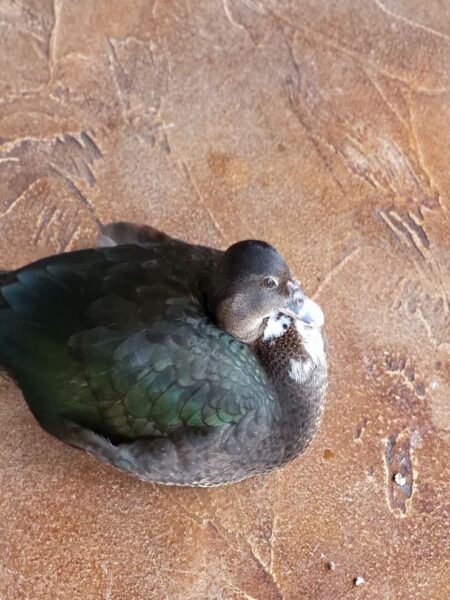
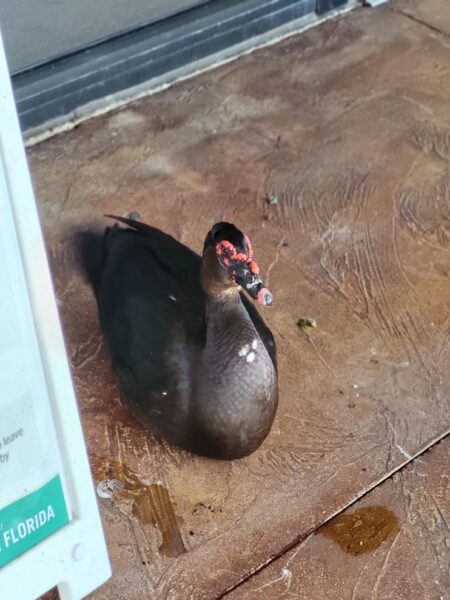
I inherited a little bird identification book from my Grandmother. Its nothing special, but I noticed that in it, and in other bird identification books I had, the illustration for Muscovy duck was all wrong. I was fired up for a new documentation project; I was going to get pictures of the crazy variation I had witnessed in the most populous duck in town. After a year or so of collecting, I have:
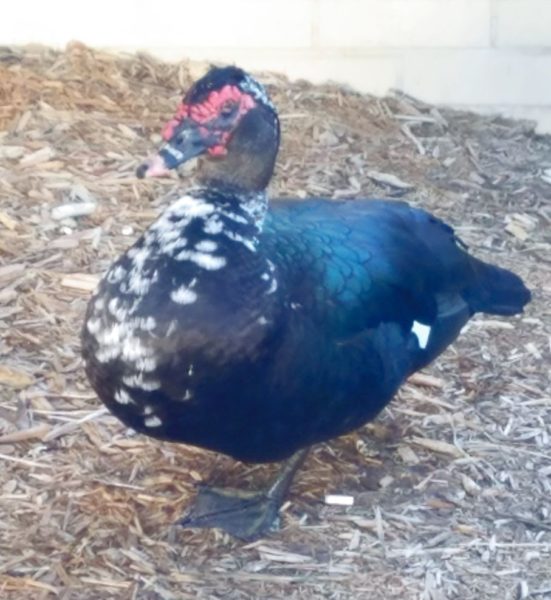
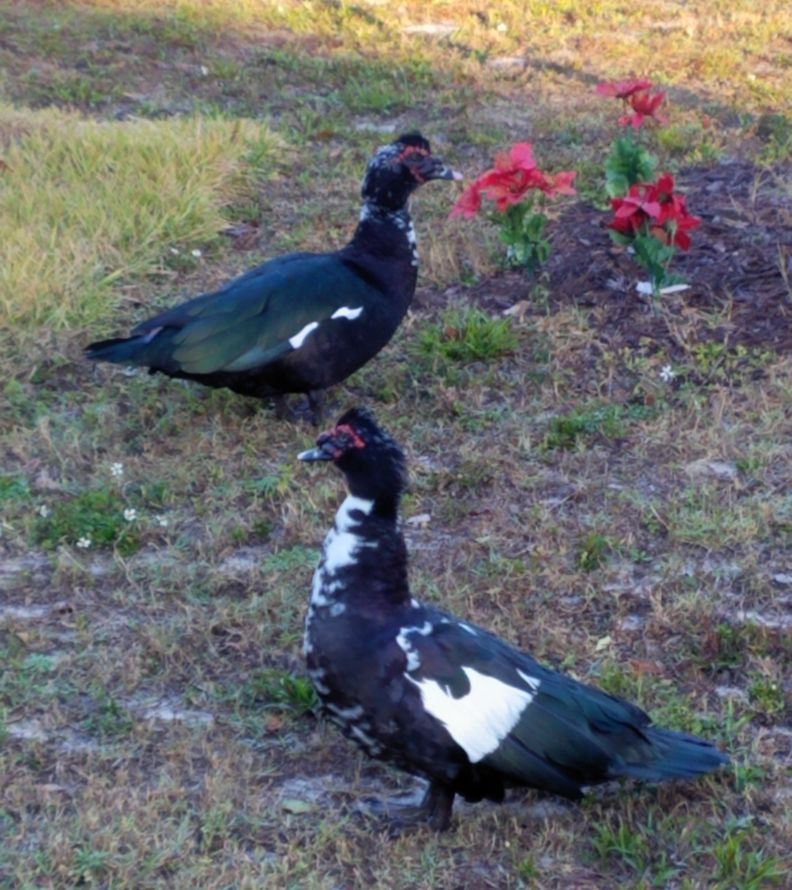
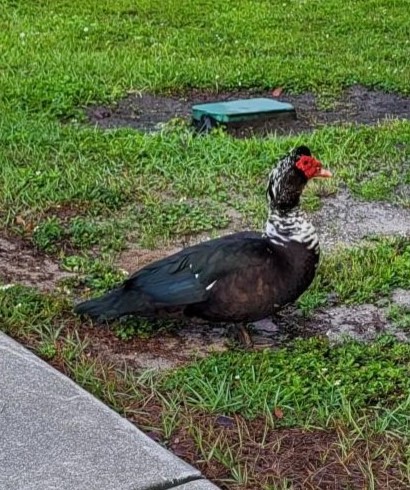
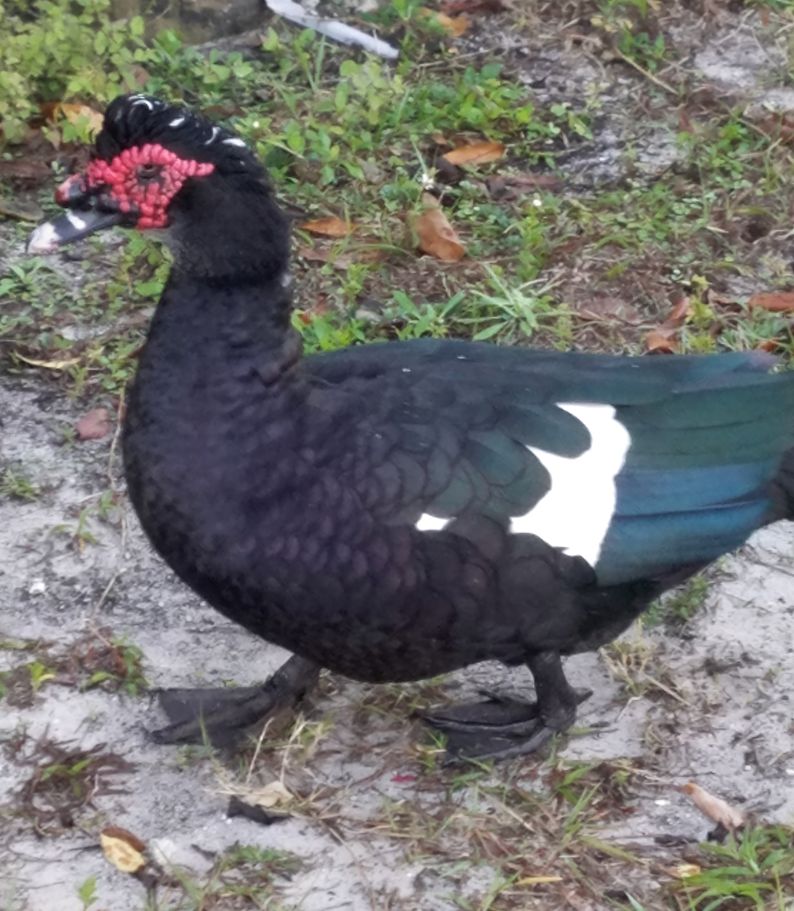
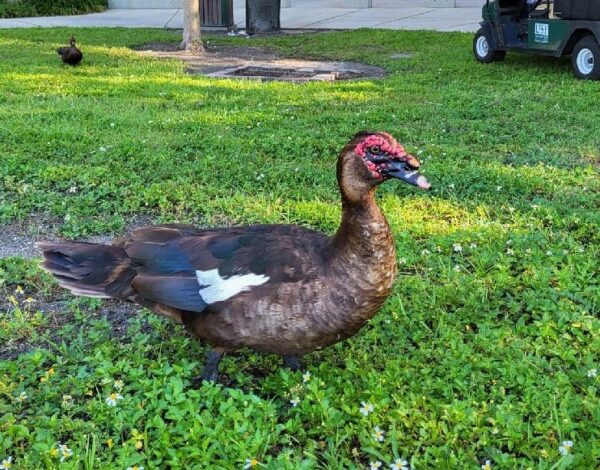
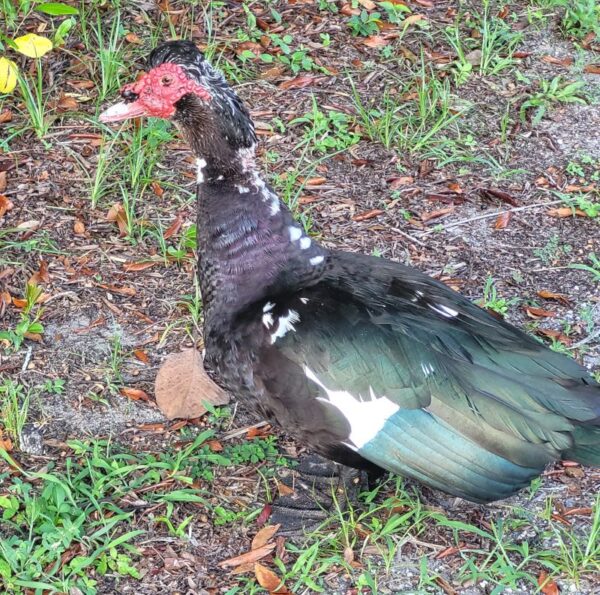
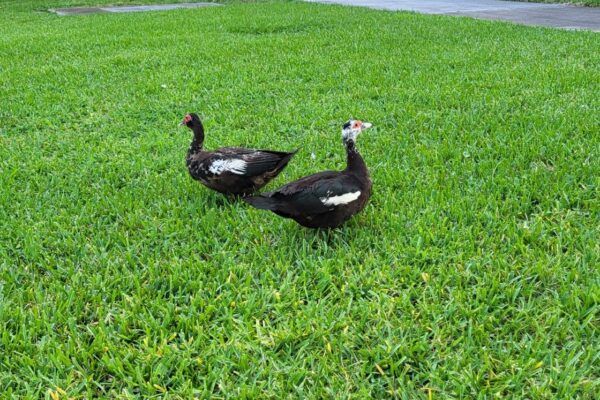
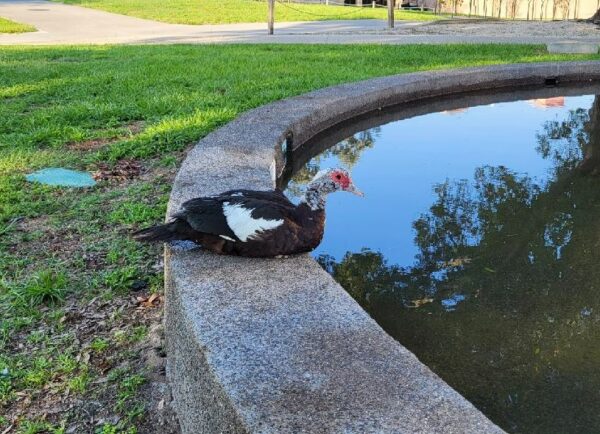
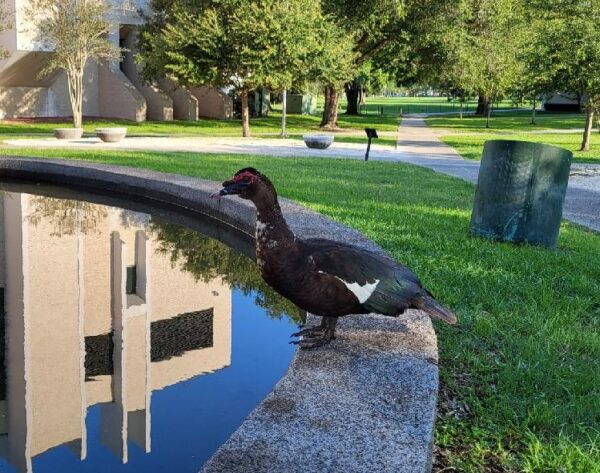
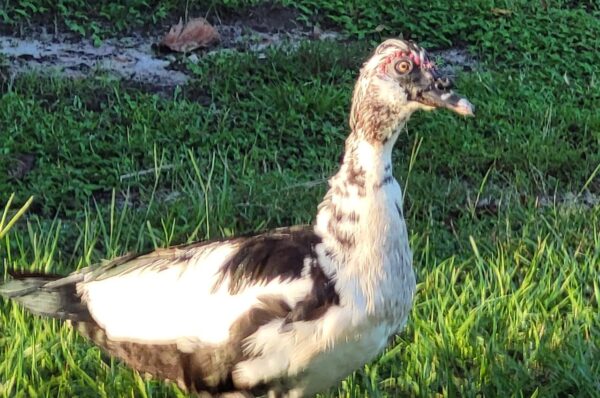
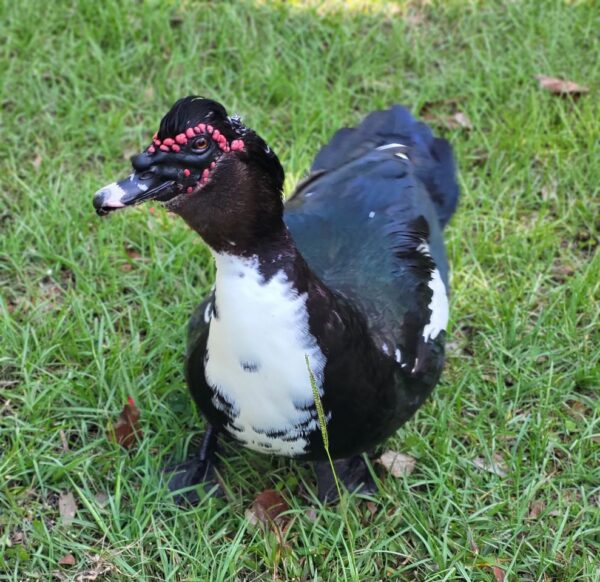
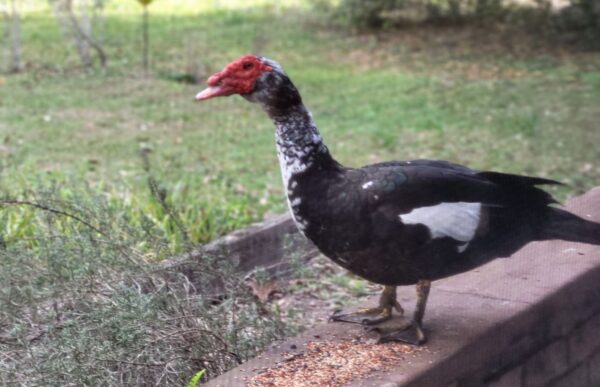
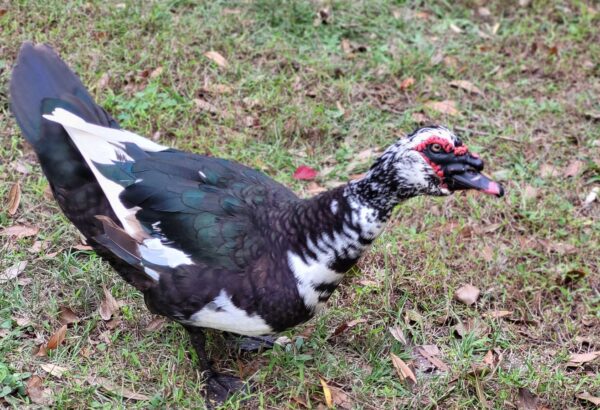
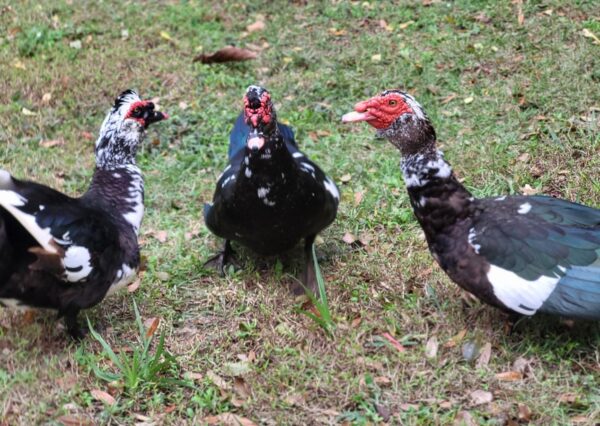
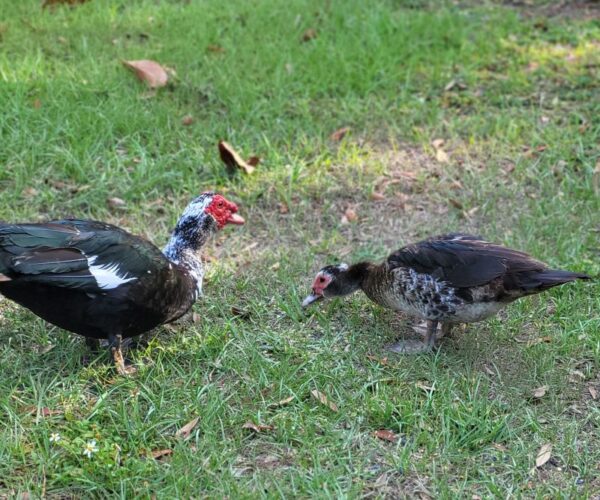
Muscovy are domesticated ducks, as mentioned in this article by Kevin J. McGowan. Muscovy can be black with white mottling, white with brown mottling, brown with variations. If it has a fleshy red face, then it is probably a Muscovy. The fleshy face is more pronounce on males. They have a labored walk, moving with their heavy chest tilted toward the ground (they were bred for meat). They hiss and sputter instead of quack. Once you get used to the normal Muscovy characteristics you start to notice the anomalies, that is, the hybrids.
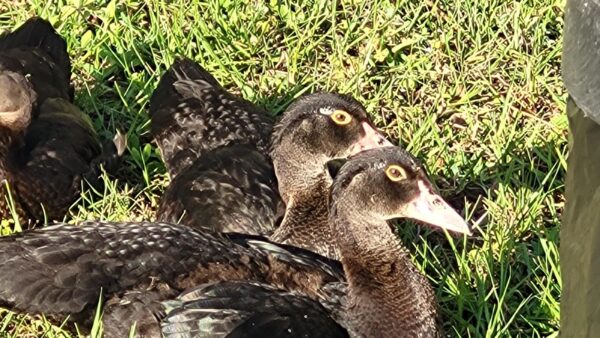
A couple of years ago I noticed some Black Swedish ducks on the lake by our house (also a domesticated breed) and thereafter many new Muscovy in the area have more pronounced white bibs. The lake has also had a small flock of Black Bellied Whistling Ducks. Last year a little clutch of ducklings turned into slimmer bodied brownish Muscovy that chirped and whistled instead of hissed. I suspect hybridization there as well. Many ducks hybridize, but mallard ducks are especially known for hybridization (10,000 Birds blog). The pictures below are from two different duck moms at work. They look much more like the Muscovy-Mallard hybrid examples in Watching Nature’s picture gallery.
 I do because I am listening to
 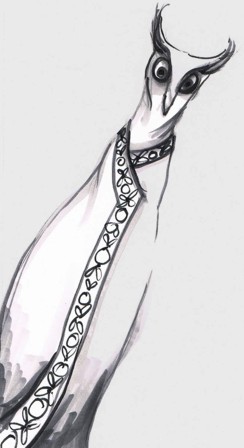 One early morning, after it had been raining quite a bit, we drove by a puddle and two stocky little birds flew out of it. It happened so fast, but I was sure they were owls.
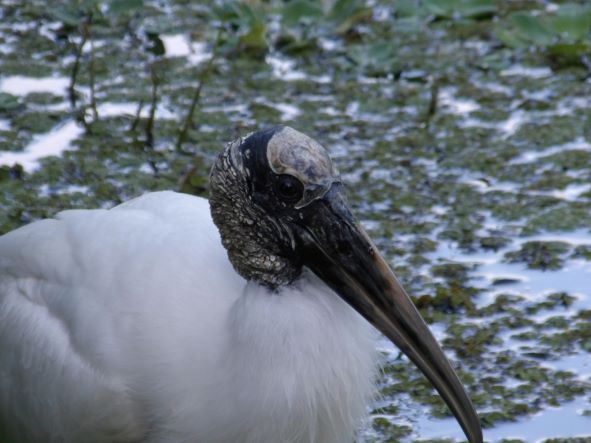
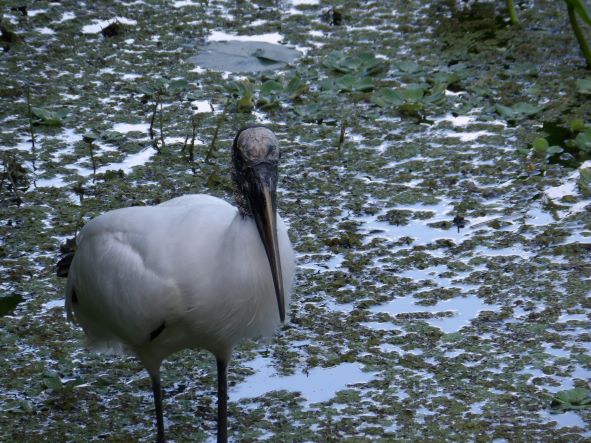
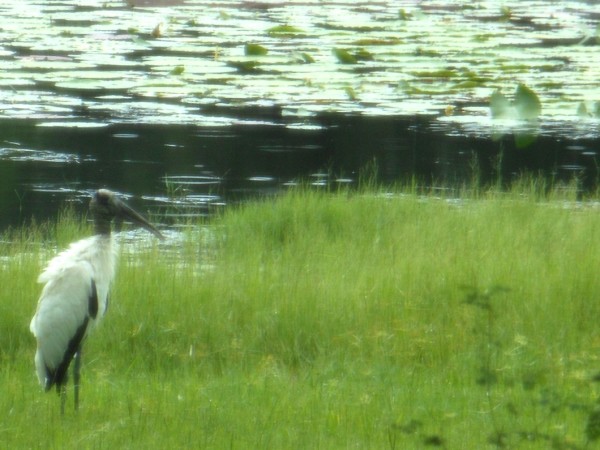 Living on a lake in Florida has turned me into a bird watcher. I mean, the things are everywhere…on cars, in parking lots, crossing the road during heavy traffic. I don’t need a lake, but having a lake means I get to see birds I wouldn’t normally. Like this stork who weathered a downpour in our back yard.
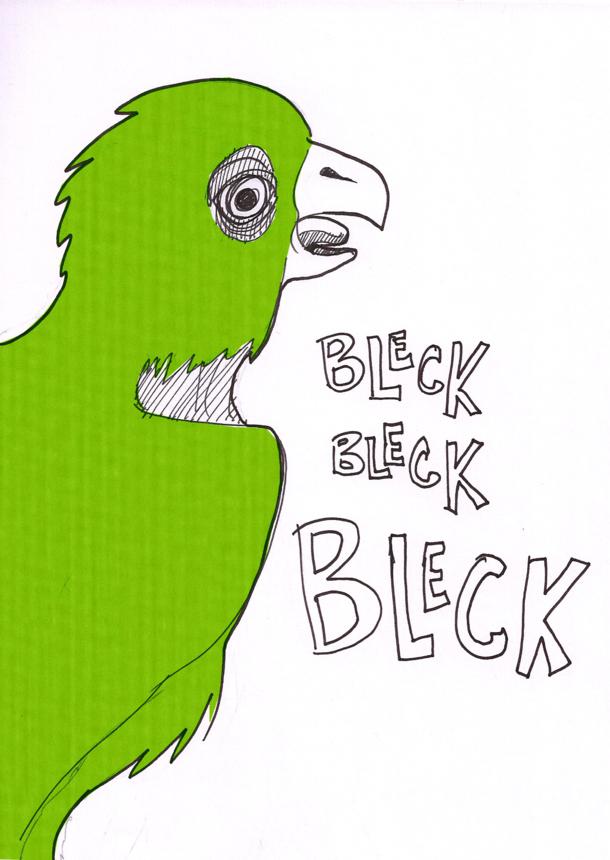 My bird, Baby, has gone crazy with the Spring Fever. She is laying eggs, attacking passers by, and generally being insane.